
Service • Integrity • Quality
Metal Roofing Installation, Including Standing Seam
Metal roofing has become a common choice across West-Central and Southwest Missouri because of how well it handles the region's weather swings — hail in spring, high heat in summer, and ice in winter. We install both standing seam metal roofing, which uses hidden fasteners and raised seams between panels, and exposed-fastener panel systems, which are more economical and common on barns and shops.
Overview
About our metal roofing work
For homes, standing seam is usually the stronger long-term choice because there are no exposed screws that can loosen or leak over time, and the panel profile sheds water and snow cleanly. For outbuildings and barns where appearance matters less and budget matters more, exposed-fastener panels are a practical, proven option that we install regularly on pole barns and shops.
Any metal roof installation we do includes proper underlayment and flashing details around valleys, chimneys, and penetrations — the details that actually determine whether a metal roof stays watertight for the long haul, not just how the panels look from the road.
Why customers choose us for this work
Storm durability
Metal panels handle Missouri hail and wind better over time than many other roofing materials, particularly heavier-gauge standing seam.
Long service life
A properly installed metal roof, especially standing seam, generally outlasts asphalt shingles by a wide margin.
Options for house or barn
We install both standing seam for houses and exposed-fastener panels for barns and shops, matched to the building and budget.
Attention to flashing details
We pay close attention to underlayment, valleys, and penetration flashing, which is where most roof leaks actually start.
Our process
How the job runs, start to finish
Step 1
Site visit and inspection
We inspect the existing roof deck and structure, measure the roof, and discuss panel style and color options.
Step 2
Written scope and quote
You get a written quote specifying panel type, gauge, underlayment, and flashing details, plus whether tear-off of an old roof is included.
Step 3
Scheduling and materials
Metal panels are ordered to length for the specific roof, and installation is scheduled around dry weather windows.
Step 4
Installation
Underlayment and ice-and-water shield go down first, followed by panels, trim, and flashing at valleys, ridges, and penetrations.
Step 5
Final walkthrough
We walk the roof and grounds with you, check flashing and trim details, and clean up job-site debris before calling it complete.
Materials and methods
What to think about before you build
Standing seam vs. exposed-fastener
Standing seam has concealed fasteners and holds up longer with less maintenance, but costs more; exposed-fastener panels cost less and work well on barns and shops where a slightly shorter service life is an acceptable tradeoff.
Ice-and-water shield
Missouri winters bring freeze-thaw cycles that can cause ice damming at eaves and valleys; a self-adhering ice-and-water membrane in those areas helps prevent water intrusion under the metal panels.
Roofing over an existing roof
In some cases metal can be installed over existing shingles, saving tear-off cost, but this depends on the condition of the existing roof deck and local code — we'll assess whether it's appropriate for your roof.
Panel gauge and color
Heavier-gauge panels resist hail denting better than thinner, less expensive panels; darker colors absorb more heat, which matters for shop and garage comfort.
Recent work
Metal Roofing projects
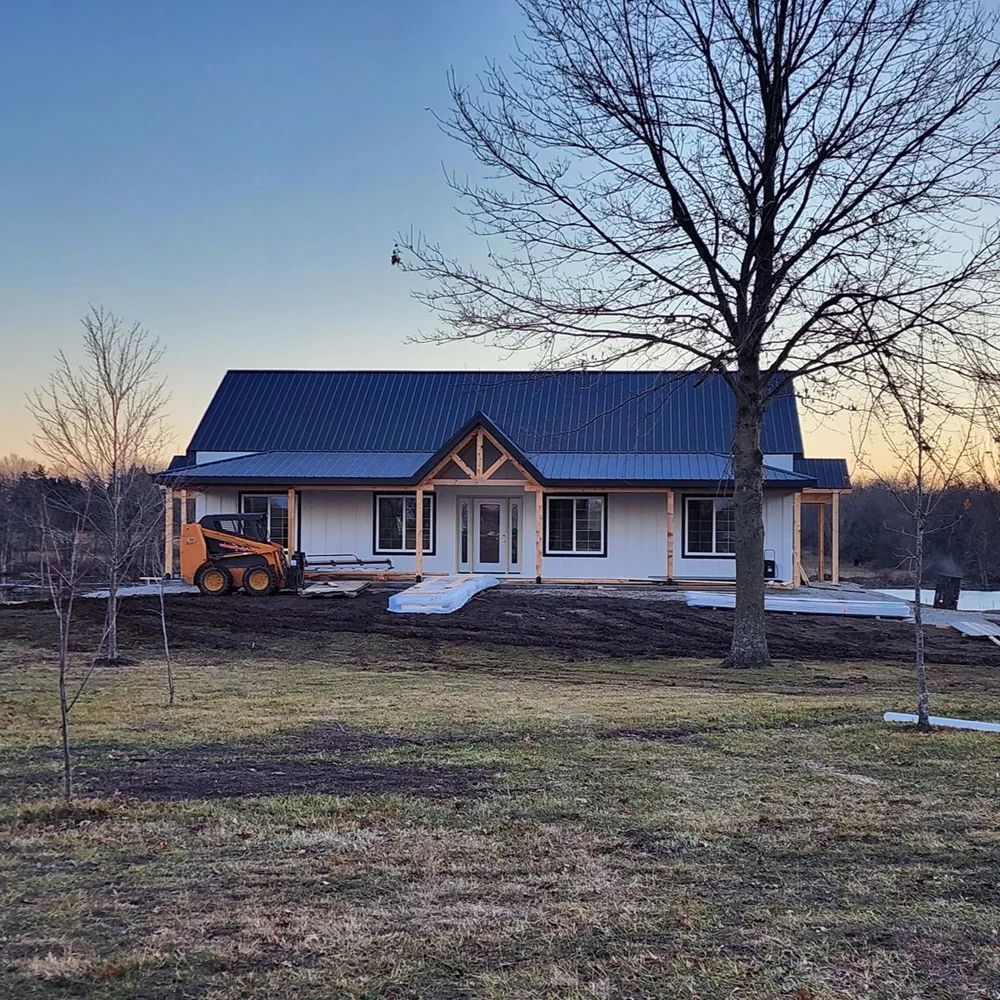
Homes Metal roof on a custom house
Roofing Standing seam metal roof
Clinton, MO
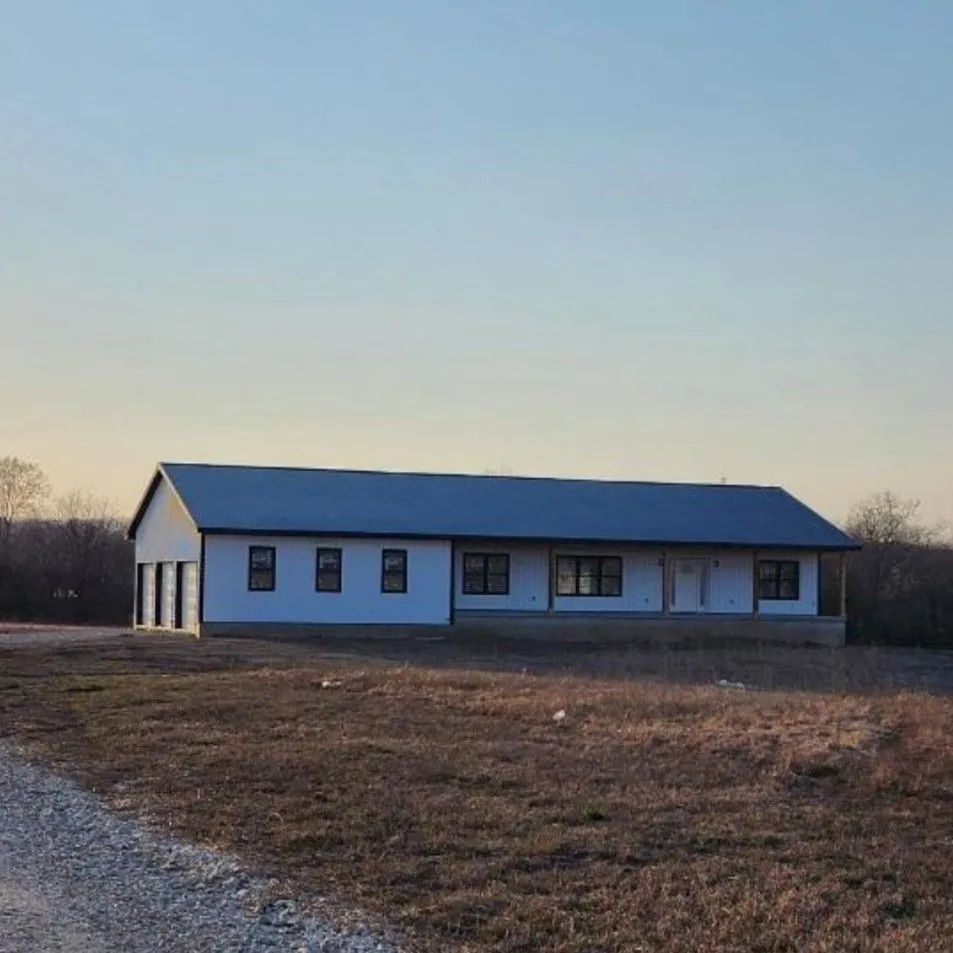
Roofing Metal roof and siding
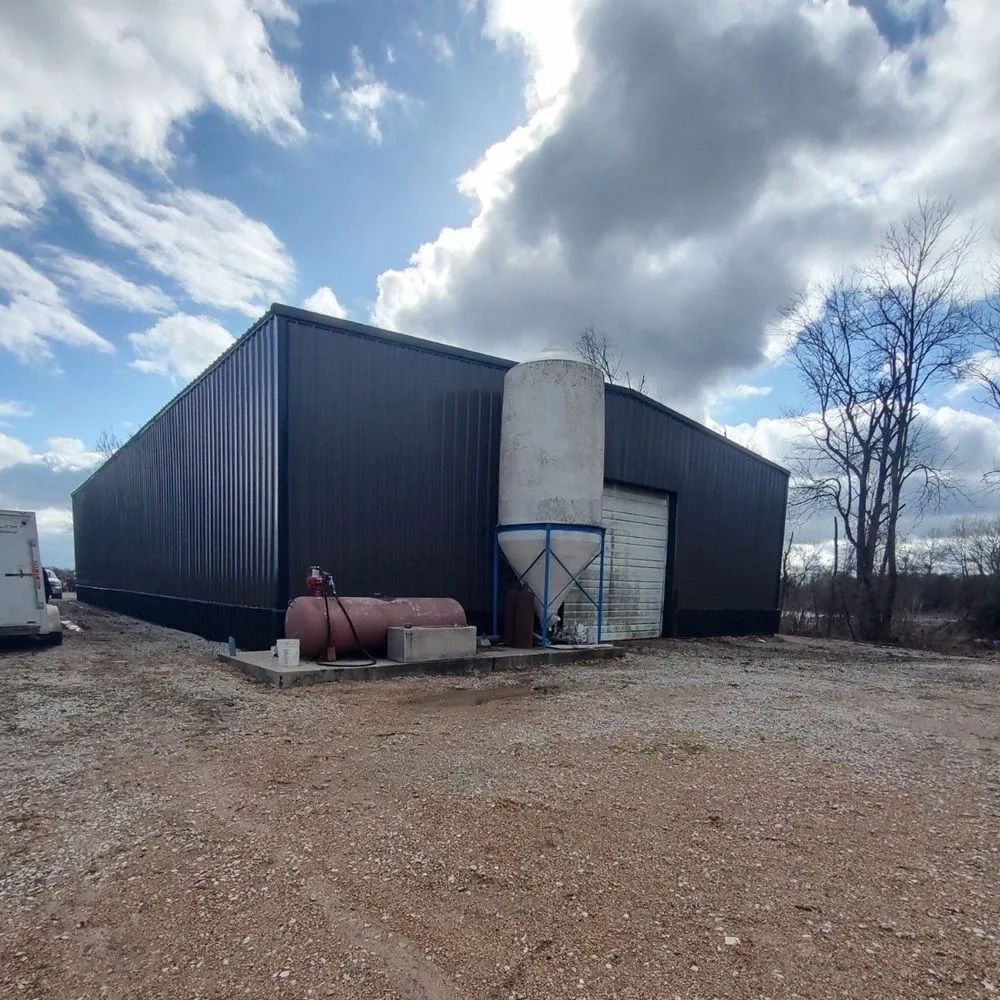
Roofing Metal roofing and siding
Calhoun, MO
Questions
Metal Roofing FAQs
Is standing seam worth the extra cost over exposed-fastener panels?
For a house, most owners find it worthwhile because of the longer service life and lack of exposed screws to maintain. For a barn or shop, exposed-fastener panels are often a reasonable and more economical choice.
Can you install a metal roof over my existing shingles?
Sometimes, depending on the condition of the roof deck and local code requirements. We'll inspect your existing roof during the site visit and tell you honestly whether that's a good option for your house.
How does metal roofing hold up to hail?
Heavier-gauge metal panels resist hail denting well, though cosmetic denting can still occur in severe storms. It generally holds up better than asphalt shingles, which can lose granules and crack under hail impact.
Do you install gutters with a new metal roof?
We can coordinate gutter work as part of a roofing project — let us know during the site visit if you want that included in the scope.
How long does a metal roof installation take?
It depends on roof size, pitch, and weather. We'll give you a realistic schedule once we've inspected the roof and finalized the scope.
Keep exploring
Related services and areas we serve
Related services
- Shingle RoofingAsphalt shingle roof replacement and new installation, done with attention to underlayment and flashing, not just shingles.
- SidingVinyl and metal siding installation and replacement, done with proper house wrap and flashing so it performs, not just looks good.
- Pole Barns & ShopsPost-frame pole barns, garages, shops, and hay barns built for farm, equipment, and shop use across the region.
- General ContractingGeneral contracting for planning and coordinating multi-phase construction projects from initial scope through completion.
Where we do this work
- Metal Roofing in Clinton, MORoofing, decks, siding, and new construction for Clinton and the Truman Lake area.
- Metal Roofing in Osceola, MODecks, siding, and roofing for Osceola homes and Truman Lake properties.
- Metal Roofing in Humansville, MOPole barns, house shells, and new construction for Humansville acreage properties.
- Metal Roofing in Bolivar, MONew construction, roofing, and remodeling for Bolivar's growing Highway 13 corridor.
Project inquiries
Get a written estimate for your metal roofing project
Tell us the property location and what you have in mind. We will walk the site and put real numbers in writing. Serving the Clinton to Bolivar, Missouri corridor.